

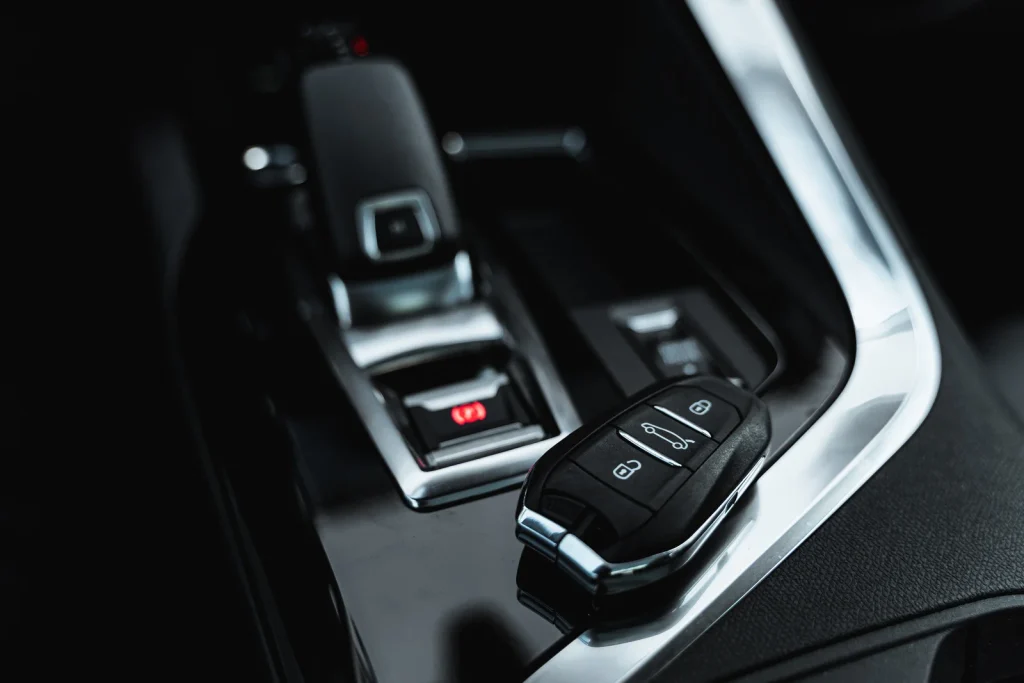
You walk up to the car, hand in your pocket, and nothing happens. No click. No lights. You try the button on the fob and still nothing. It’s one of those problems that feels baffling because you haven’t done anything differently, but suddenly your smart key isn’t working.
Smart keys and keyless entry systems have a few common failure points. Most of the time the fix is straightforward once you know what’s actually failing. The tricky part is that the symptoms can look similar whether it’s a dead battery, a signal fault, or something more involved.
This guide covers the most likely causes, what to check first, and when you need a professional to programme or replace the key. If you’re stuck now and need someone out to you, call Keygrammer on 07723 427101.
How Smart Keys and Keyless Entry Actually Work
A smart key, sometimes called a proximity key or keyless entry key, constantly broadcasts a low-frequency signal. The car’s antenna system picks up that signal when the key is within range, typically around a metre or two, and allows the door to open with a touch. When you get in and press the start button, a separate transponder signal is verified before the engine will fire.
There are two distinct systems at play: the passive entry system that handles door locking and unlocking, and the immobiliser system that controls starting. Both rely on the key functioning correctly. A fault in either one can leave you locked out, unable to start, or both.
The Most Common Reasons a Smart Key Stops Working
Dead or Weak Key Battery
This is the most common cause of a smart key not working, by some distance. Smart key batteries are typically CR2032 or CR2025 coin cells. They last anywhere from one to three years depending on usage, but they don’t always give obvious warning before they go flat.
A weak battery can cause intermittent keyless entry failures before it dies completely. If the car has been harder to access or start recently, the battery is the first thing to check. Most smart key casings open with a small flathead screwdriver or a coin. The battery type is usually printed inside the casing. Most pound shops and supermarkets carry them.
One important point: even with a flat key battery, most vehicles have a backup. Holding the key fob directly against the start button while pressing it can allow the immobiliser to read the transponder passively, without needing the battery-powered signal. Check your vehicle handbook for the exact method for your car.
Signal Interference
Keyless entry systems operate on radio frequencies that can be disrupted by nearby equipment. Supermarket car parks, multi-storey car parks, and areas near certain types of industrial equipment are common trouble spots. If your key works fine everywhere else but fails in a specific location, interference is likely.
Relay attacks are a related issue. A relay attack uses two devices to amplify your key’s signal from inside your home to your car on the driveway, fooling the car into thinking the key is nearby. This is a theft method rather than a malfunction, but it explains why keyless entry cars are sometimes targeted in driveways. Keeping smart keys in a signal-blocking pouch when at home is a straightforward precaution.
Key Programming Lost or Corrupted
Smart keys are programmed to a specific vehicle. On rare occasions, usually after a vehicle battery replacement, a main battery disconnect, or a software update via the OBD port, a key can lose its pairing with the car. The key itself is undamaged, but the vehicle no longer recognises it.
This is more common on certain makes and models than others. The fix is reprogramming the key to the vehicle, which requires specialist diagnostic equipment and can’t be done at home. A mobile auto locksmith can carry this out on-site.
Physical Damage to the Key or Internal Components
Smart keys contain a small circuit board alongside the battery and transponder chip. Dropping the key, particularly onto a hard surface, can crack the board or dislodge the chip. Water ingress, while keys are increasingly water resistant, can also cause internal corrosion over time.
External damage is obvious. Internal damage isn’t. If the key casing looks fine but the key stopped working after a drop or exposure to water, the internals are worth inspecting. In many cases a replacement key programmed to the vehicle is the most reliable fix.
What to Try Before Calling a Locksmith
If your smart key has stopped working, run through these checks before assuming the worst.
First, replace the battery. It takes five minutes and costs under two pounds. Even if the battery seems recent, a faulty cell can fail early.
Second, try the backup start method. Hold the key fob against the start button and press. The exact position varies by manufacturer, so check the handbook if needed. This bypasses the passive signal and reads the transponder directly.
Third, try a different location. If you’re in a busy car park or an area with lots of wireless equipment nearby, move the car or try from a different spot.
If none of those resolve it, the key likely needs programming or replacement. That’s where a mobile auto locksmith comes in.
If you’ve lost your smart key entirely and need a replacement cut and programmed, our car key replacement service covers the full process.
Smart Key Replacement: What It Involves
A replacement smart key isn’t just a case of cutting a new blade. The key needs to be programmed to communicate with your vehicle’s immobiliser system. That requires specialist equipment that reads and writes to the car’s ECU, not something you can do with an off-the-shelf key from a key cutting kiosk.
The cost of smart key replacement varies by vehicle make and model. Luxury brands and newer vehicles with more complex keyless systems tend to cost more than older or more straightforward models. A main dealer will charge for parts and labour separately. A mobile auto locksmith brings both to your location and typically completes the job in one visit.
If all keys to the vehicle have been lost, the process is different and involves full vehicle recoding. See our guide to all keys lost situations for what that involves.
Keyless Entry and Vehicle Security
Smart key systems are convenient, but they’ve introduced a specific theft vulnerability. Relay attacks, as mentioned earlier, are now among the most common methods used to steal keyless entry vehicles from driveways. The attack amplifies the key’s signal from inside the house to the car outside, tricking the car into unlocking.
Signal-blocking pouches, sometimes called Faraday pouches, are an inexpensive way to prevent this. Storing keys away from exterior walls and windows also reduces exposure. Some manufacturers have introduced motion-sensing keys that stop broadcasting when stationary, which helps, but doesn’t eliminate the risk entirely.
Thatcham Research, which sets the UK’s vehicle security standards, publishes guidance on keyless entry theft and how to protect against it:
The AA also covers relay theft and prevention in their vehicle security advice:
For questions about key programming and immobiliser work, see our car key programming.
What to Do If Your Smart Key Is Still Not Working
A smart key that’s stopped working almost always comes down to one of a handful of causes: a flat battery, lost programming, physical damage, or signal interference. The battery is always worth ruling out first. Beyond that, reprogramming or replacement is the fix, and both need specialist equipment.
Keygrammer covers Peterborough and a 35-mile radius including Stamford, Spalding, Whittlesey, and March. Smart key programming and replacement is carried out on-site. If you’re stuck now or need a quote, call 07723 427101 or visit the contact page at keygrammer.net.
Frequently Asked Questions
Q1: Why is my smart key not working?
The most common cause is a flat or weak key battery, which can cause keyless entry to fail before the battery dies completely. Other causes include signal interference from nearby wireless equipment, a key that has lost its programming after a vehicle battery change, or internal damage to the key’s circuit board. Replacing the battery is always the first thing to check.
Q2: Why is my keyless entry not working even with a new battery?
If keyless entry is still not working after a battery replacement, the key may have lost its pairing with the vehicle, particularly if the car battery was disconnected around the same time. It could also point to a faulty battery contact inside the key, internal damage to the key’s circuit board, or a fault with the car’s antenna system. A mobile auto locksmith can diagnose which component has failed.
Q3: Can I start my car if my smart key battery is dead?
Most vehicles have a backup method for starting when the smart key battery is flat. Holding the key fob directly against the start button and pressing allows the car’s system to read the transponder chip passively without needing the battery-powered signal. The exact position varies by manufacturer, so check your vehicle handbook for the specific method for your car.
Q4: How much does a smart key replacement cost in the UK?
The cost of smart key replacement varies considerably by vehicle make and model. Newer vehicles with more complex keyless systems and luxury brands tend to be at the higher end. A mobile auto locksmith is generally more competitive than a main dealer because there are no dealer overheads and the work is done at your location in one visit. Contact Keygrammer on 07723 427101 for a quote based on your specific vehicle.
Q5: Can a smart key be reprogrammed?
Yes, in most cases a smart key that has lost its programming can be reprogrammed to the vehicle without needing to buy a new key. This requires specialist diagnostic equipment that interfaces with the car’s ECU, which a qualified auto locksmith will carry. The process varies in complexity by make and model but is typically completed on-site.
Q6: Why does my proximity key not work in certain locations?
Keyless entry systems operate on radio frequencies that can be disrupted by interference from nearby equipment. Supermarket car parks, multi-storey car parks, and areas near certain industrial or broadcasting equipment are common trouble spots. If the key works normally elsewhere, signal interference at that specific location is the most likely explanation.
Q7: Is it safe to have a keyless entry car?
Keyless entry cars are convenient but require an additional security precaution to counter relay attacks, where thieves use devices to amplify the key’s signal and open the car remotely. Storing smart keys in a signal-blocking Faraday pouch and keeping them away from exterior walls and windows significantly reduces this risk. Some manufacturers now offer motion-sensing keys that stop broadcasting when stationary.
Q8: What is a relay attack and how do I prevent it?
A relay attack is a theft method where two people use electronic devices to amplify a smart key’s signal from inside a property to the car outside, tricking the car into unlocking and allowing it to be driven away. Prevention is straightforward: store keys in a Faraday pouch, keep them away from front doors and windows, and consider a steering lock or secondary immobiliser as an additional deterrent.
Q9: Can a locksmith programme a smart key?
Yes. A qualified auto locksmith with the appropriate diagnostic equipment can programme smart keys and proximity keys to a vehicle on-site. This includes adding new keys, reprogramming keys that have lost their pairing, and in all keys lost situations, recoding the vehicle so that only the new keys will work.
Q10: What should I do if I've lost my smart key?
If you’ve lost your smart key, you’ll need a replacement cut and programmed to your vehicle. A mobile auto locksmith can usually carry out this work at your location. If it was the only key and you can’t access or start the car, it becomes an all keys lost situation, which requires the vehicle’s immobiliser to be recoded as well as new keys being made.
Q11: Why did my smart key stop working after a battery change?
Disconnecting the vehicle’s main battery can sometimes cause a smart key to lose its programming, particularly on certain makes and models. The key itself hasn’t been damaged, but the car no longer recognises it. Reprogramming the key to the vehicle restores normal operation and is carried out using specialist diagnostic equipment.
Q12: Is there a mobile smart key replacement service near Peterborough?
Keygrammer is a mobile auto locksmith covering Peterborough and a 35-mile radius, including Stamford, Spalding, Whittlesey, March, and surrounding areas. Smart key programming and replacement is carried out on-site at your location. Call 07723 427101 for availability and a quote.