

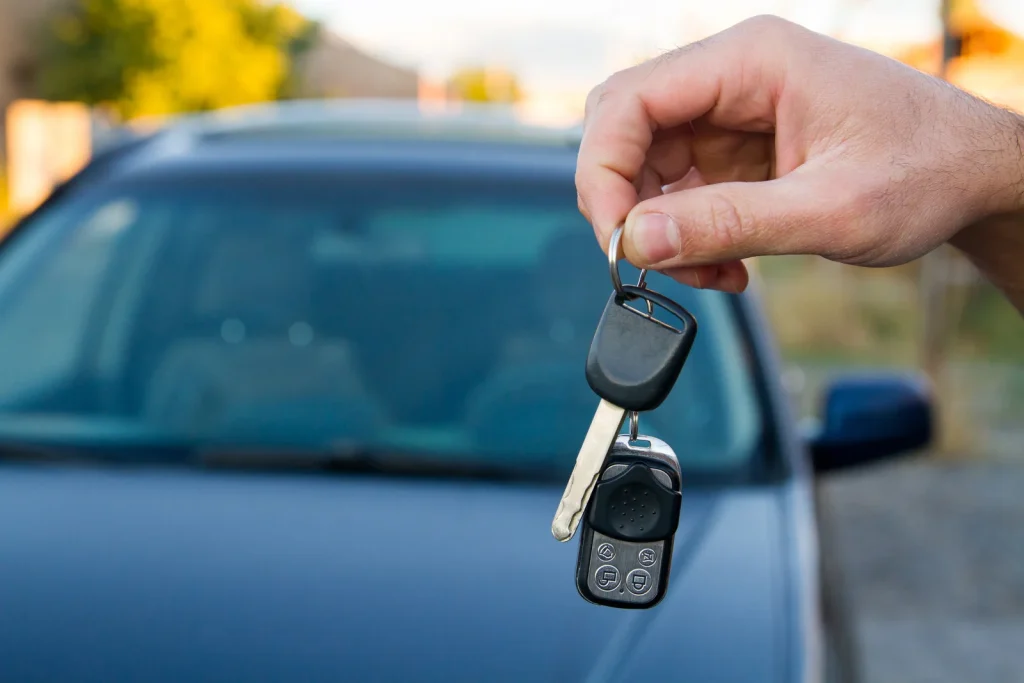
Having your car key stolen is a different situation to losing one. The vehicle is potentially at risk right now, not just inconvenient to use. The steps you take in the next few hours matter, and getting them in the right order makes a significant difference to both your security and your insurance position.
We’re Keygrammer, a specialist mobile auto locksmith covering Peterborough and the surrounding area. Stolen key situations are something we deal with regularly, and the advice in this guide reflects what actually needs to happen rather than a generic checklist. We work on vehicles only, which means we understand both the security implications and the practical steps for getting your car back to being fully secure.
If your key has been stolen and you’re reading this now, here’s what to do.
Step 1: Report It to the Police
Report the theft to the police as soon as possible. This isn’t just about catching the thief. A police report creates an official record of the theft, which your insurance company will almost certainly require if you make a claim. Without it, a claim may be delayed or rejected.
In England and Wales, you can report theft online via the police’s 101 service if it’s not an emergency. If you believe the vehicle is at immediate risk of being taken, call 999. When you report, note the crime reference number. You’ll need it for the insurer.
You can report non-emergency crime in England and Wales
Step 2: Contact Your Insurance Company
Call your insurer and report the theft of the key. Give them the crime reference number from the police. Ask specifically whether your policy includes key cover or whether this falls under your standard theft provision.
Be clear with them that the key has been stolen, not lost. Insurers treat these differently in some cases, and it affects what they’ll cover and what documentation they need. Also ask whether getting a replacement key yourself will affect any claim, since some policies require you to use their approved suppliers.
Don’t delay this call. Some policies have time limits on reporting theft, and missing them can complicate a claim significantly.
Step 3: Secure the Vehicle Now
Until the stolen key is deactivated from your vehicle’s system, whoever has it can potentially access and start your car. If you know where the vehicle is and it’s in a location you’re concerned about, consider moving it somewhere more secure, such as a locked garage or a car park with CCTV, while you arrange a replacement.
If you have a spare key, don’t leave it anywhere near the car. If the thief knows what vehicle the stolen key belongs to and where it’s parked, having a spare inside the vehicle or visible nearby makes the situation considerably worse.
A steering wheel lock or additional physical deterrent is worth fitting temporarily if you have one, as an added barrier while the key situation is being resolved.
Step 4: Get a Replacement Key and Deactivate the Stolen One
This is the critical step for restoring your vehicle’s security. Getting a replacement key isn’t just about having something to open and start the car. It’s about removing the stolen key from your vehicle’s authorised key list so it can no longer be used.
On modern vehicles, this is done through the immobiliser system. A specialist auto locksmith programs a new key to the car and, as part of that process, can configure the system so that the stolen key’s transponder code is no longer recognised. The old key becomes useless against your specific vehicle.
This is not something that happens automatically or by simply getting a new key cut elsewhere. The immobiliser reprogramming is what actually closes the security gap. A key cut without immobiliser reprogramming means the stolen key still works.
Our car key replacement service, covers this process in full, including what to expect and how long it takes.
Do You Need to Change the Locks as Well?
On modern vehicles, changing the physical door locks is not usually necessary when a key has been stolen, provided the immobiliser is reprogrammed correctly. The immobiliser reprogramming removes the stolen key’s ability to start the car, and on keyless entry vehicles it also removes its ability to open the doors.
On older vehicles without a transponder system, where the only security barrier is the physical lock, changing the locks or having them rekeyed is a more relevant consideration. If you’re unsure which situation applies to your vehicle, a specialist can advise when you call.
What Does a Stolen Car Key Mean for Your Insurance?
This depends on your policy. Some comprehensive policies include key cover as standard or as an add-on, which may cover the cost of a replacement key and the reprogramming. Others treat it as a theft claim under the standard policy, which may involve an excess. A small number of policies don’t cover key theft at all as a standalone event.
If you’re claiming on insurance for the replacement, check whether your policy requires you to use specific suppliers or whether you can use any qualified locksmith and claim back the cost. Using a mobile auto locksmith is often faster and cheaper than going through a dealer, and many insurers will accept this provided you have a receipt and the work is documented.
Don’t assume the excess makes a claim not worth making. Key replacement and reprogramming has a cost, and for smart keys or proximity keys on premium vehicles, that cost can be significant. Run the numbers before deciding.
A Note on Relay Theft and Keyless Entry Vehicles
If your vehicle has keyless entry and the key was stolen as part of a relay theft attempt or from inside your home, there’s an additional consideration. Relay theft works by amplifying the signal from a keyless key inside the house to trick the car into thinking the key is nearby. If the key was physically stolen rather than relayed, this doesn’t apply directly, but it’s worth knowing about for the future.
Signal-blocking pouches, also called Faraday pouches, prevent a keyless key from broadcasting when stored at home. They’re inexpensive and widely available. If you’re getting a replacement key for a keyless vehicle, it’s worth picking one up at the same time.
If you want to understand how keyless entry programming works and what’s involved in securing your vehicle after a theft, our car key programming service page, covers the full process.
The Summary
Report the theft, contact your insurer, secure the vehicle, and get a replacement key with full immobiliser reprogramming. That’s the order. The immobiliser step is the one that actually restores your vehicle’s security, not just getting a new key cut. Don’t skip it or delay it.
Keygrammer covers Peterborough and a 35-mile radius, available 24 hours a day. If your car key has been stolen and you need a replacement and reprogramming today, call 07723 427101 and we’ll get it sorted.
Car Key Stolen — Frequently Asked Questions
Q1: What should I do if my car key is stolen?
Report the theft to the police first and get a crime reference number. Then contact your insurance company to report the stolen key and ask about your cover. Secure the vehicle if you’re concerned about its location, and arrange for a replacement key with full immobiliser reprogramming as soon as possible. The reprogramming step is what actually removes the stolen key’s ability to access and start your car.
Q2: Can someone use my stolen car key to steal my car?
Yes, if the key hasn’t been deactivated. A stolen car key can still open the doors and start the engine until the vehicle’s immobiliser is reprogrammed to remove it from the authorised key list. Getting a replacement key through a specialist auto locksmith includes this reprogramming, which makes the stolen key useless for your specific vehicle.
Q3: How do I deactivate a stolen car key?
Deactivating a stolen car key is done by reprogramming the vehicle’s immobiliser so the stolen key’s transponder code is no longer recognised. This requires specialist diagnostic equipment and is carried out by an auto locksmith or main dealer as part of getting a replacement key made. The stolen key cannot be deactivated remotely or through any app unless your vehicle has a manufacturer-specific connected service that offers this.
Q4: Does car insurance cover a stolen car key?
This depends on your policy. Some comprehensive policies include key cover as standard or as an optional add-on, which covers replacement costs. Others may treat it under the general theft provision, which usually involves paying an excess. Some policies don’t cover key theft as a standalone event at all. Check your policy documents or call your insurer directly and ask specifically about stolen key coverage.
Q5: Do I need to change my car locks if my key is stolen?
On modern vehicles with transponder systems, changing the physical locks is not usually necessary if the immobiliser is reprogrammed correctly. The reprogramming removes the stolen key’s ability to start the car. On older vehicles without a transponder, where the physical lock is the only security barrier, rekeying or replacing the locks is a more relevant step. A specialist can advise based on your specific vehicle.
Q6: How quickly do I need to get a replacement after a car key is stolen?
As soon as practically possible. Until the immobiliser is reprogrammed, the stolen key can still be used to access and start the vehicle. Report the theft to police first, then contact your insurer, then arrange a replacement. Don’t leave the vehicle unattended in a location where someone with the stolen key could easily find and take it while you sort the paperwork.
Q7: What is stolen car key replacement and how does it work?
Stolen car key replacement is the process of creating a new key and reprogramming the vehicle’s immobiliser so the stolen key is removed from the authorised key list. A specialist auto locksmith cuts a new key blade and programs a new transponder chip to the vehicle. The immobiliser is then configured so only the new key is recognised. The stolen key can no longer open the car or start the engine.
Q8: Should I report a stolen car key to the police even if the car wasn't taken?
Yes. A police report creates an official record and a crime reference number that your insurer will require for any claim. It also ensures the theft is documented in case the key is used to take the vehicle later. Reporting it costs nothing and protects your position significantly.
Q9: Can I use my spare key if my main key is stolen?
Yes, but get a replacement made and the immobiliser reprogrammed as soon as possible. Running on a single spare key is risky because if that key is lost or stolen too, you’re in a much more complicated position. Also, the spare key itself doesn’t deactivate the stolen key. Someone with the stolen key can still access and start the car until the immobiliser is updated.
Q10: What is relay theft and is it related to car key theft?
Relay theft is a method where thieves use electronic devices to amplify the signal from a keyless entry key stored inside a house, tricking the car into thinking the key is nearby and allowing it to be opened and started without the physical key being present. It’s different from physically stealing a key, but the result can be the same. If you have a keyless entry vehicle, storing your key in a signal-blocking Faraday pouch when at home prevents this.
Q11: Can a mobile auto locksmith replace a stolen car key?
Yes. A specialist mobile auto locksmith can cut and program a replacement key and carry out the immobiliser reprogramming to deactivate the stolen key, all on site at your location. Most replacement jobs are completed the same day. This is usually faster and less expensive than going to a main dealer for the same work.
Q12: Can you replace a stolen car key near Peterborough?
Yes. Keygrammer covers Peterborough and a 35-mile radius, operating 24 hours a day. We replace stolen car keys and carry out immobiliser reprogramming on site for all major makes and models. Call 07723 427101 for a fixed quote and we’ll confirm availability before setting off.